

Introduction
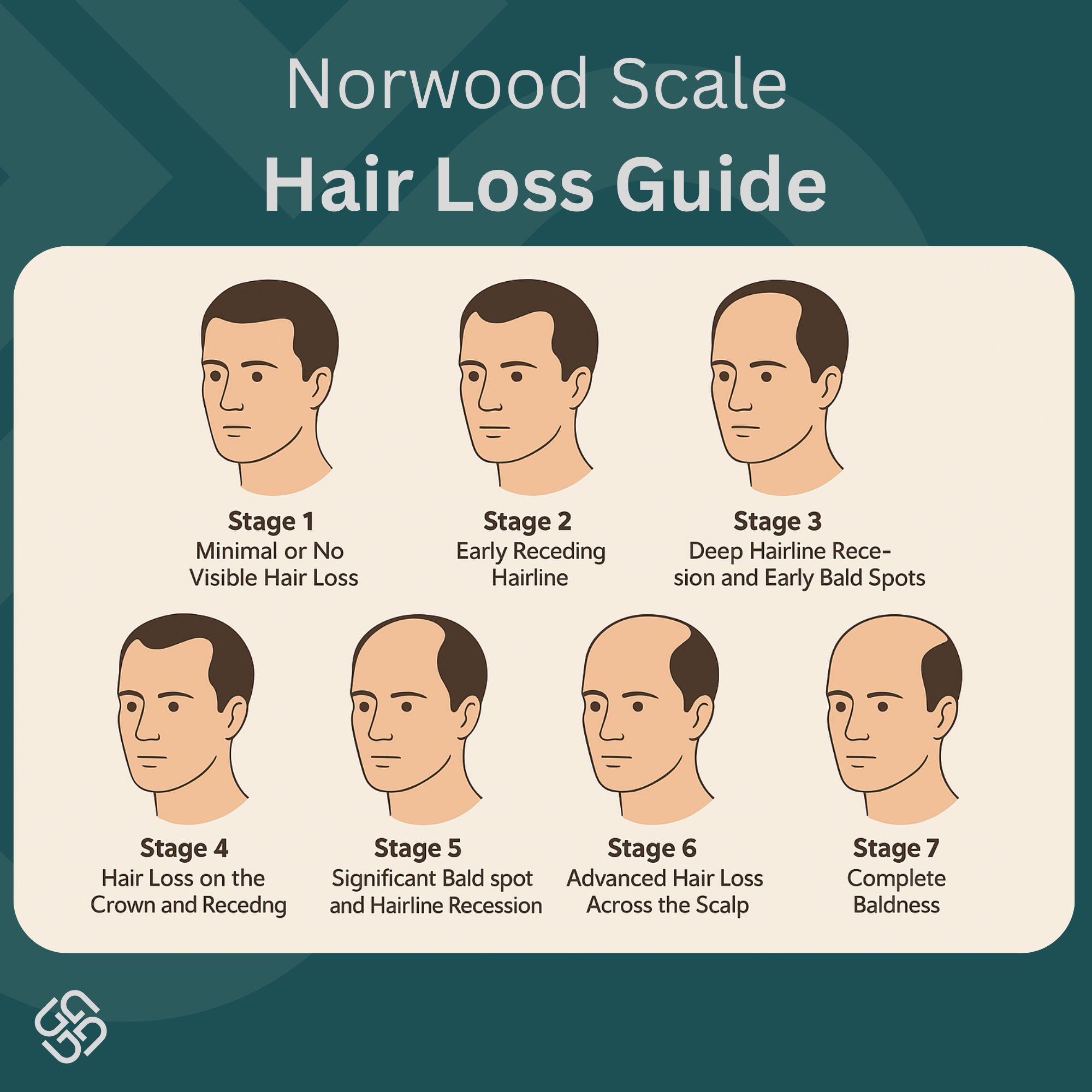
The Norwood Scale hair loss classification is the most common visual guide to evaluate androgenetic alopecia, mostly known as male pattern baldness.
In the following, all questions about Norwood Scale have been meticulously answered.
Norwood Scale for hair loss classifies every hair loss stage from receding hairline to thinning at the crown. In this way, it offers a standard reference point for both the patients and hair transplant clinics.
The hair loss measurement scale was first introduced by James Hamilton in the 1950s. After that it was updated by Dr. O’Tar Norwood in the 1970s. So, it is generally called the Norwood-Hamilton Scale. The scale consists of seven distinct stages to identify the current degree of hair loss and predicted future patterns. Thus, the surgeon can decide the best course of action for the patients.
Every man experiences hair loss on a different level. While one can experience a receding hairline, the other can experience crown hair loss. The Norwood Scale helps to precisely identify hair loss patterns so the surgeon can determine the right strategy for the patients.
The Norwood Scale divides the hair loss into 7 stages. In the first stage hair loss is minimal, but later stages indicate an increasing area of baldness. In this way, the severity of hair loss is measured, and it helps to determine the most effective treatment.
Norwood Scale Hair Loss Stages Explained
The Norwood Scale has seven important stages. Each stage indicates a different level of hair loss.
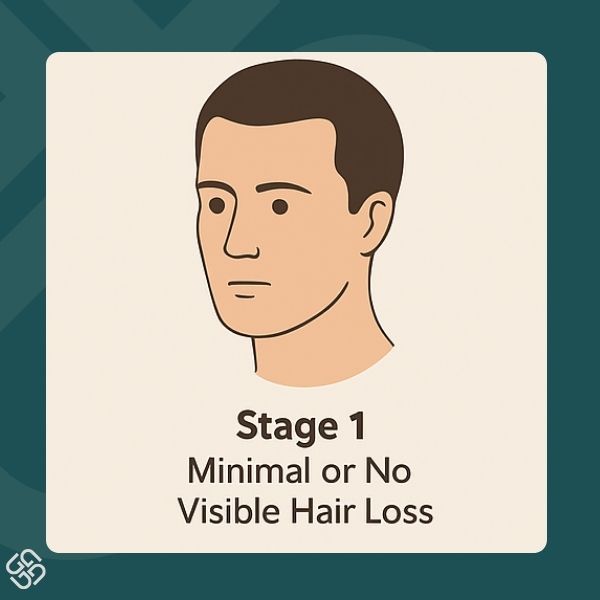
Stage 1: Minimal or No Visible Hair Loss
Stage one, called the control stage, shows only small recession on the temporal sides. Or, there is a minimal sign of receding.
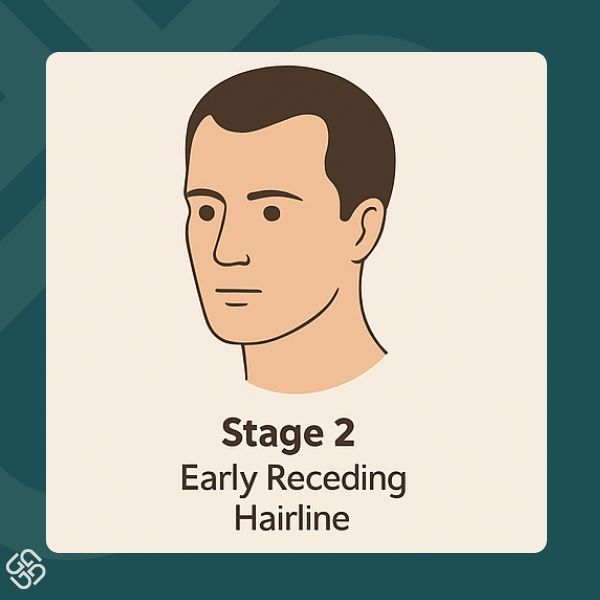
Stage 2: Early Receding Hairline on the Norwood Scale
In stage 2, the patient may experience a slight triangle-shaped receding in the temporal area. It can be a warning stage.
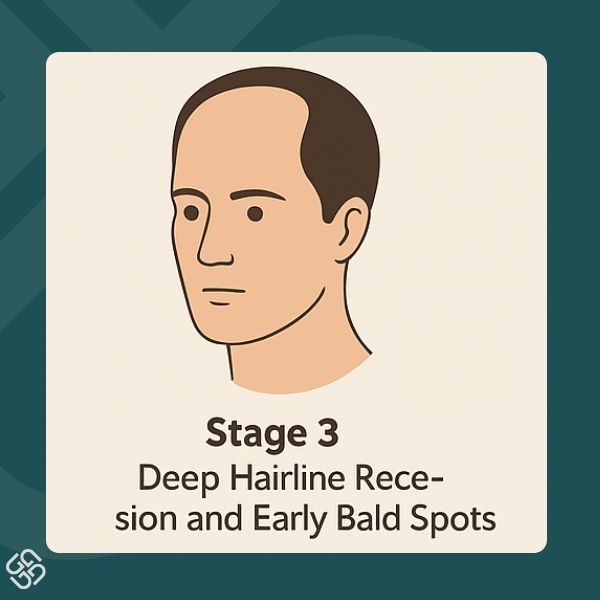
Stage 3: Deep Hairline Recession and Early Bald Spots
It is the very first stage of recession. So, hair loss becomes visible at the temples, creating an “M”-shaped hair loss pattern. Besides, there is an apparent hair loss at the top of vertex (the scalp).
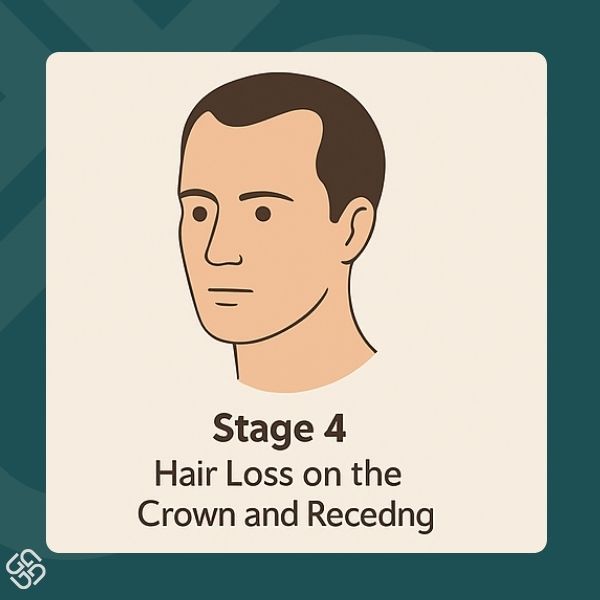
Stage 4: Hair Loss on the Crown and Receding Temples
Stage four shows more severe hairline recession. There may be sparse or no hair on the crown area. Hair forms a “U” shape, and recession on the front is more dense.
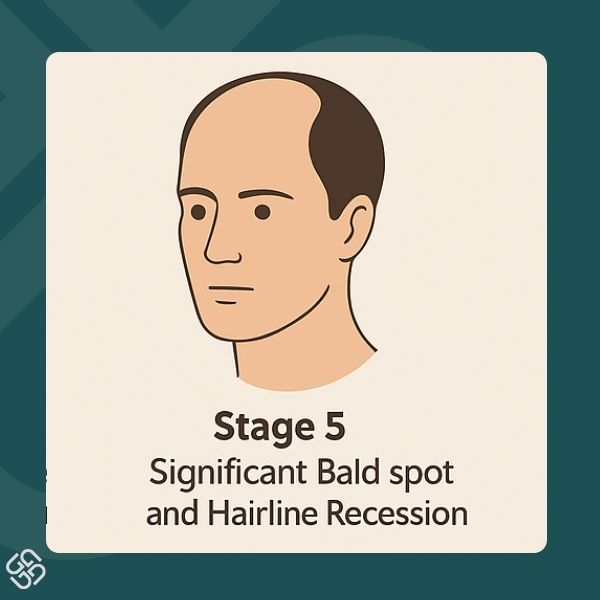
Stage 5: Significant Bald Spot and Hairline Recession
It is one of the very first critical stages. Hair loss is significantly visible in the forehead line and the crown area. There is a horseshoe-shaped mark on the head. The hair is thinner, and the line becomes narrower than in the previous stage.
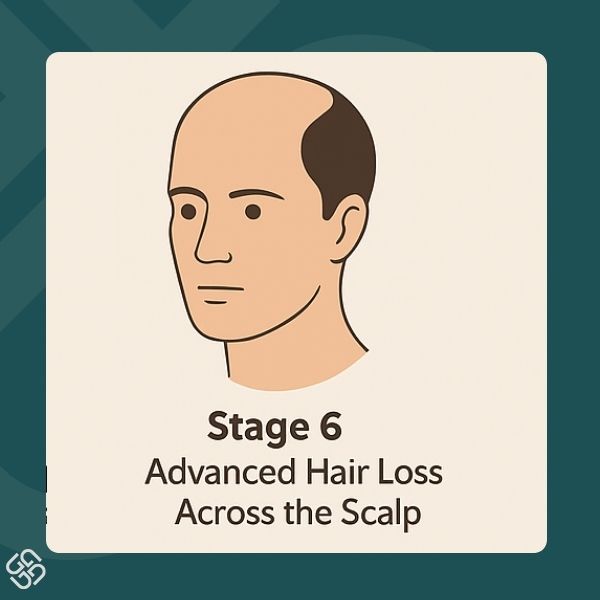
Stage 6: Advanced Hair Loss Across the Scalp
Hair loss occurs at the crown and the front. Although there may be some hair along the sides of the head, most of it is lost and scattered.
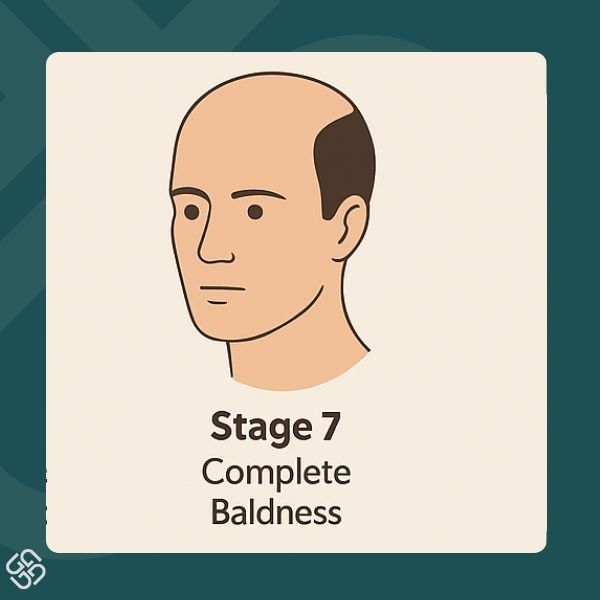
Stage 7: Complete Baldness Defined by the Norwood Scale
Stage 7 is the level of baldness that is severe and extreme. There is no hair on the ears and nape.
Norwood Scale and Hair Loss Treatments
The Norwood Scale provides a clear roadmap to decide the most effective hair loss treatment for male pattern baldness.
There are several effective treatments for the Norwood scale stages 1 to 3.
Minoxidil spray: It is applied to the scalp so that hair loss slows down, and it stimulates hair growth.
Finasteride tablets: An oral medication that reduces DHT levels. It helps reduce the effect of genetic hair loss.
PRP application: This is a natural treatment. Plasma derived from the patient’s own blood is injected into the scalp to stimulate hair growth in this treatment method.
Quick Tips about Norwood Stage Hair Loss
Hair Transplant Options for Advanced Norwood Stages
Hair transplants have actually been discussed since stage 4. FUE and DHI methods provide a natural look by using hair follicles at the nape for advanced Norwood stages.
Preventive Care and Lifestyle Tips for Slowing Hair Loss
The following steps cannot prevent hair loss completely. However, they are very supportive of the hair loss treatment process.
- Stress management: A high stress level is one of the biggest triggers of hair loss Therefore, some relaxation techniques, including yoga or meditation, can help to feel better.
- Balanced eating: Stronger and healthier hair growth can be supported by a rich diet that includes vitamins, minerals, and proteins.
- Avoiding chemicals and excessive heat in hair: If the patient limits harsh dyes, styling products, and heat tools, additional damage and breakage will be prevented.
Norwood Scale Hair Loss in Men vs. Women
The Norwood Scale is improved for male pattern baldness. Women experience mostly thinning hair loss, so the Ludwig Scale is preferred.
Limitations of the Norwood Scale Hair Loss Classification
It isn’t suitable to diagnose women’s hair loss.
Everyone’s process cannot be at the same pace and level due to genetic factors.
Visual assessment can be subjective.
The Norwood Scale isn’t for diffuse thinning. It mainly focuses on receding hairlines and bald spots, not overall hair density.
It cannot be used to follow treatment progress. The patient shouldn’t expect to see small improvements or slowdowns in hair loss on the scale during the treatment progress.
Conclusion: Using the Norwood Scale Hair Loss Guide Effectively
This guide provides an effective result to assess the hair loss stage to decide the right treatment, from medication for early stages to hair transplants for advanced stages. Thus, the patient has realistic expectations, and it allows us to follow the long-term progress of any treatments the patient undergoes.
In addition, the Norwood scale will be a common language for doctors and patients. Therefore, consultations will also be clearer and more structured. As a result, the Norwood scale is very effective to identify the pattern and severity of hair loss, which makes it easier to compare treatment results over time and to control that the targeted approach is not only appropriate but also effective.
FAQs About the Norwood Scale Hair Loss Guide
Men usually start showing hair loss patterns at the beginning of their 20s. However, it can change based on genetic predisposition.
No, the Norwood Scale can show current stages, but it cannot predict pace.
Yes, the Norwood scale is used for male pattern baldness. The Ludwig Scale is used for women.
The Norwood scale was first introduced by James Hamilton in the 1950s.
It is quite reliable for early stages, but it needs to be supported with a clinical examination.
Yes, the Norwood Scale is a universal reference to assess hair loss stages.
Yes, some people can experience quick progress.
The Norwood Scale is taken as a reference before and after the hair transplant operation.
Genetics is the most important factor. If the family history has baldness, the pace will be faster.
The BASP and Savin methods are more detailed; yet, the Norwood Scale is more practical, so it is more preferable.