
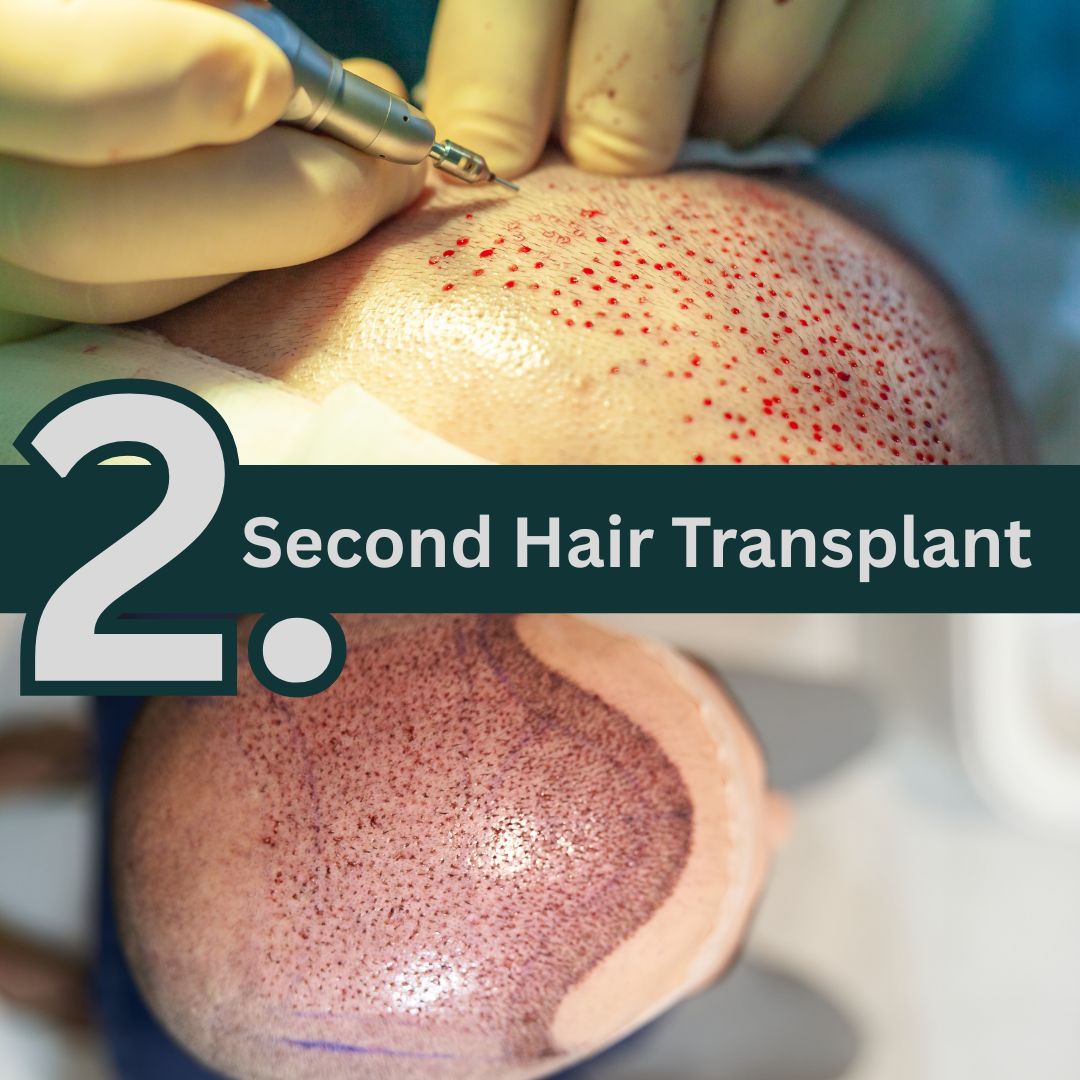
For many patients, a second hair transplant is the final pass—small corrections that make the whole look complete. Consider it when the mirror wants more: refined density, better balance, and calm, natural flow.
At Samran Health Group in Istanbul, we focus on results that look like your own hair—clean edges, even coverage, and a finish that sits well in daily light. No big claims. Just clear goals and honest expectations for a 2nd hair transplant in Turkey.
This guide answers the questions patients ask before they decide: who is a good candidate, when to return after the first session, how methods like FUE, DHI, or Sapphire FUE can help, what recovery is really like, which risks to consider, and how pricing is presented without fine print. Read on for practical, patient-first information from Samran Health Group—so you can choose with confidence and plan for results that fit your life.
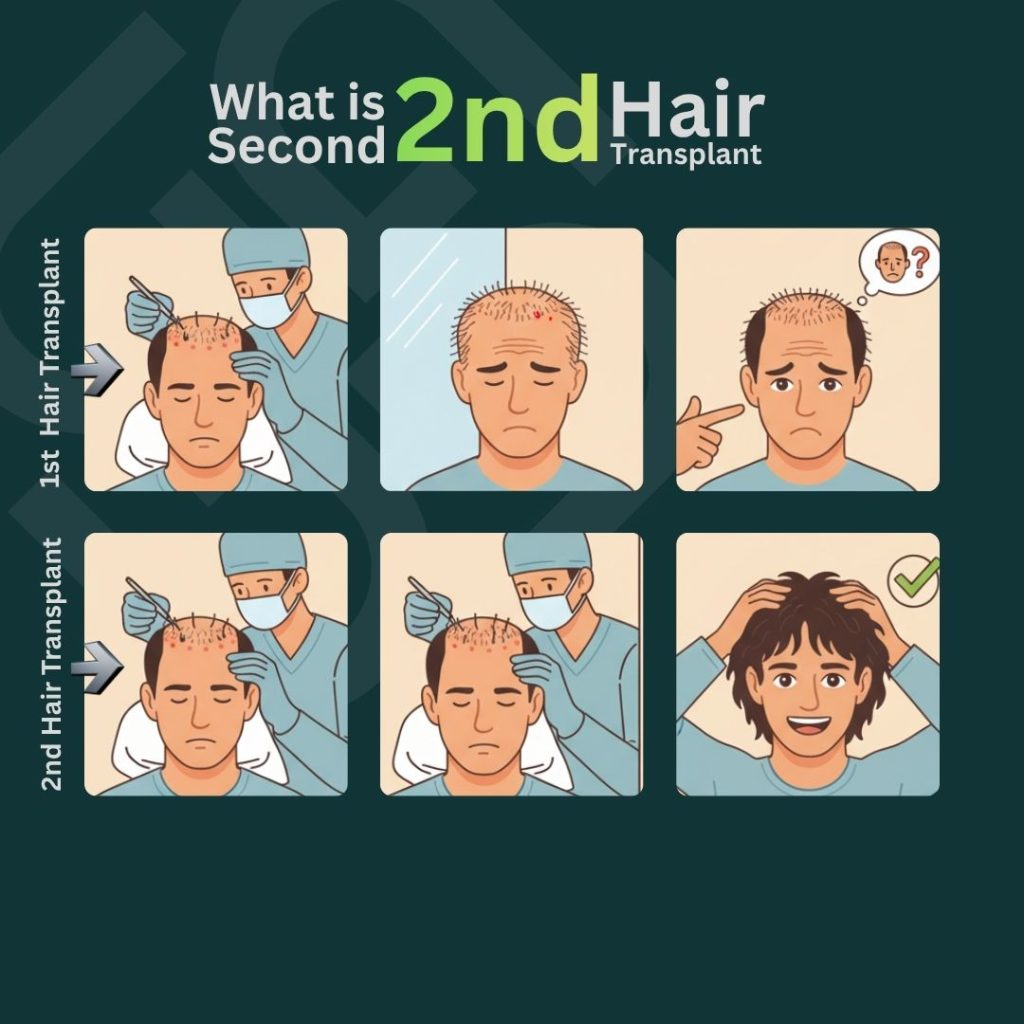
What Is a Second Hair Transplant?
A second hair transplant is a planned follow-up after the first result has fully settled. It targets what the eye still notices—thinner zones behind the hairline, a part line that shines, or a crown that lags—adding selective density while protecting the donor area. It’s not a restart; it’s a measured touch-up that aims for a cleaner frame and easier styling in daily light.
Planning focuses on what will change the whole picture with the fewest grafts. Surgeons review photos taken under the same lighting, check current density, and map remaining reserves before choosing how to proceed. Technique is matched to the task—FUE for broader support, DHI for precise spacing in tight areas, or Sapphire FUE for fine recipient sites—so the new work blends smoothly with existing hair and ages well over time.
The first session builds a base on a mostly untouched scalp; the second works inside an existing pattern. Angles, previous channels, and limited donor reserves set the rules. Extraction is lighter and spread wider to avoid visible thinning, while placement targets areas the eye reads first.
Goals are narrower and written clearly: singles at the leading edge for a soft outline, stronger units just behind for support, measured spacing over the crown’s swirl. This disciplined approach delivers a cleaner frame without spending more grafts than you need—standard practice at Samran Health Group.
Native hair can keep thinning after a good first result. Small gaps may appear behind the hairline or around the crown, especially in strong light. A second hair transplant blends these borders and evens the look, so styling feels easier and the scalp shows less in daily life.
Some patients also return for refinement. The first pass may have been cautious, or graft survival may have varied by zone. Others want a softer, less straight hairline or better balance at the temples. A follow-up sets a modest graft budget and targets the areas the eye notices first.
When Can a Second Hair Transplant Be Performed?
When it comes to second hair transplants, timing follows biology, not the calendar. A second hair transplant works best after the first result has fully matured and daily styling shows what still needs help. Most patients wait until density, direction, and shine have settled and any shock loss has reversed.
Some cases need extra time. For instance, crown work often matures slower. Prolonged redness or thickened skin may also call for a longer gap. If you are starting a medical plan to steady native hair, give it a few months to show an effect before you schedule surgery. Waiting protects graft survival and preserves the donor area.
For the best read on coverage, most surgeons advise patients to plan a 9–12 month pause after your first hair transplant before a second; this window lets grafts mature, angles stabilize, and true needs show up in everyday light. By month 9, coverage is easier to judge in real life; by month 12, hair caliber and texture are close to final. This window lets you see true gaps rather than temporary changes from healing.
Some people benefit from waiting longer. Crowns can take 12–15 months to read as full. If you begin medications or light therapy, allow 3–6 months to measure their impact. Use n photos in the same light and angle to set a clear baseline before planning a second session.
Healthy, settled skin gives new grafts the blood supply they need. When tissue is still inflamed, channels compete for flow and swelling can distort angles, lowering survival and leaving texture less predictable. Letting the first transplant mature allows scars to remodel, redness to fade, and circulation to stabilize—so placement is cleaner and take rates are higher.
Healing time also protects design. Mature tissue lets the surgeon match direction to existing hairs instead of fighting edema or tenderness. The result is smoother recovery, more even density, and a second session that blends in rather than drawing attention.
Who is a Second Hair Transplant Suitable For?
The right time for a second hair transplant is when styling feels stable, yet small gaps—front, part line, or crown—remain. So, you’re likely suitable if your first session looks settled, but measured additions would improve the hairline or blend the crown. A second hair transplant suits patients whose first result has fully matured and who still notice clearly defined thin zones—just behind the hairline, along a part line, or at the crown. The goal is refinement, not a reset: small, targeted additions that improve what is most visible in normal light and everyday styling. If you can point to the exact areas that bother you (rather than “more everywhere”), you’re thinking like an ideal second-session candidate.
Clinical fit also matters. You should have adequate donor reserve, a stable scalp, and steady hair loss over recent months. Consistent-light photos and a quick density check confirm where extra grafts will actually be seen, and where restraint protects long-term options. Medical context—iron/ferritin, thyroid status, medications—should be reviewed. Expectations stay practical: cleaner framing, smoother blending, and preserved donor capacity for the future.
Sometimes the first session is intentionally cautious or the yield varies by zone. The result looks good at a glance, yet the transition zone behind the hairline, the part line, or the crown still reads thin in bright light. A second hair transplant targets those small but visible areas, adding density where it will actually be seen in daily styling—not everywhere at once.
Planning stays modest and precise. Singles refine the leading edge; doubles and triples sit just behind for support. A written graft budget and per-cm² density targets keep the donor safe while making a clear, measurable upgrade. The aim is a cleaner frame and more even coverage without spending more grafts than you need.
Native hair can keep thinning after a successful first transplant. As surrounding strands recede, small gaps appear around the original work—often behind the hairline, along the part, or across the crown. A second hair transplant blends into these shifting borders, so density reads even in normal light and styling feels simpler day to day.
The plan stays focused and conservative. Surgeons set a modest graft budget, target the zones the eye notices first, and match technique to the task (FUE for broader support, DHI for precise spacing, Sapphire FUE for clean recipient sites). When appropriate, medical maintenance is discussed to steady background loss and protect the result over time.
A second hair transplant is often chosen to refine the hairline—softening an overly straight edge, fixing minor asymmetry, or rebuilding subtle temple support. Small, well-placed singles create natural irregularities at the front, while slightly stronger units sit just behind to add quiet depth. The aim is a cleaner frame that looks right in daylight and styles without effort.
Planning is precise rather than heavy. The surgeon maps where the eye lands first, sets a modest graft budget, and matches angles to existing growth so nothing looks transplanted. Results show up as better balance in photos, smoother transitions at the temples, and a line that feels like it has always been there.
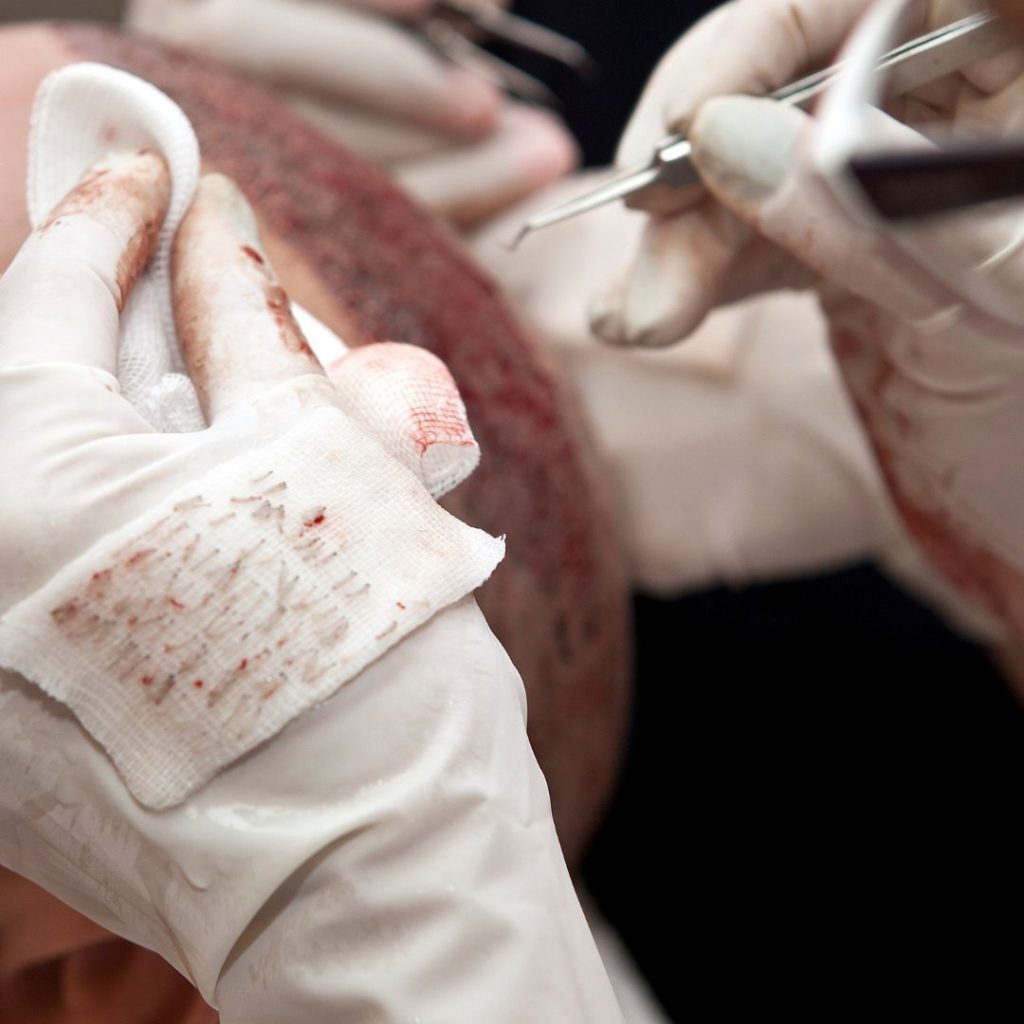
How is a Second Hair Transplant Performed?
A second hair transplant is often chosen to refine the hairline—softening an overly straight edge, fixing minor asymmetry, or rebuilding subtle temple support. Here, you can follow these steps:
- Step 1 – Assessment: Standardized photos and trichoscopy map cm² density, miniaturization, prior punch scars, and safe donor reserves. A written plan sets zone targets and a modest graft budget.
- Step 2 – Prep & Marking: Local anesthesia, hairline/temple/crown borders marked to match natural angles; partial or full trim as needed.
- Step 3 – Extraction (FUE): Widely spaced, feathered harvesting from strong donor bands; punch angle follows hair exit to minimize transection. Grafts are kept hydrated and cool to reduce out-of-body time.
- Step 4 – Recipient Sites: Sapphire blades create fine, direction-matched channels; DHI pens may be used for tight edges or part lines.
- Step 5 – Implantation: Singles refine the front; 2–3 hair units behind deepen tone. Mid-scalp and crown follow native flow (including the whirl).
- Step 6 – Closure & Aftercare: Pressure dressing for donor, non-stick protection for recipient, written wash/medication protocol, and photo-based follow-ups at days 2–3, 7–10, and months 3/6/12.
Donor Area Analysis and New Graft Planning
The process opens at the donor, reading density before anything else. at first, your surgeon reads coverage in natural light, then runs trichoscopy to count units per cm² and spot miniaturization. Furthermore, your surgeon reviews hair caliber and curl, map prior punches and micro-scars, and set a safe harvest range. Extractions spread across strong zones and stay light near old entry points, so the back and sides keep an even look in daily light.
Next comes a written graft plan. Each target zone gets a modest budget and a clear density goal per cm². The surgeon places singles along the hairline for a soft edge and uses doubles/triples just behind for support. Angles match your existing flow. Technique follows the task—FUE for broader reinforcement, DHI for tight spacing, or Sapphire FUE for clean recipient sites. Short out-of-body time and photo checkpoints protect yield and preserve future donor options.
When it comes to second hair transplants, technique follows the job, not the other way around. FUE suits broader reinforcement: the surgeon extracts units one by one and places them with angles that match existing flow. It keeps marks tiny and recovery steady, which helps when you need coverage across the mid-scalp or a compact crown. DHI excels at close control in tight spaces. Using an implanter pen, the surgeon sets depth, angle, and direction in a single move—ideal for hairline refinement or filling a visible part line.
Sapphire FUE refines classic FUE with crystal-tipped blades that open clean, narrow channels. This allows closer spacing with less tissue trauma and helps swelling settle faster. Many second sessions mix methods: DHI for the front edge, Sapphire FUE just behind for quiet volume, and standard FUE for wider zones. The right blend keeps grafts readable where the eye lands first while protecting the donor for the future.
In a second hair transplant, density is reorganized—not added indiscriminately. We map visual-priority zones (hairline, mid-scalp, crown) and set per-zone cm² targets to shift follicles where they change perception most. Singles reframe the frontal edge; just behind, 2–3 hair units deepen tone without forming a wall. Mid-scalp spacing is staggered to avoid grid patterns and improve light scatter. At the crown, channels follow the native whirl with tapered outward density. Extractions are feathered across robust donor bands, preserving reserves while redistributing coverage for a smoother, more even read in daylight.
Is the Donor Area Sufficient for a Second Hair Transplant?
Donor sufficiency depends on three things: current density, how much was harvested before, and signs of miniaturization. We confirm these with trichoscopy and a mapped count per cm². Most surgeons keep the total lifetime harvest within ~30–35% of the safe zone. If your first session used part of that, a second session often allows ~8–15% more—spread widely to avoid visible thinning. We also review hair caliber, curl, and prior punch marks. The goal is simple: add visible coverage while the back and sides still look even in normal light and photos.
At Samran Health Group, we start by planning the harvest, not by taking hair. Extractions are light and widely spaced, feathered across the strongest bands and kept clear of weak strips or old punch lines. Separate runs never touch—there’s at least one punch diameter between passes. Thicker shafts reinforce mid-scalp volume; finer shafts stay away from the front edge. Punch angle tracks the hair’s exit to reduce transection. Each region gets a small, explicit target so no single patch is overworked. This preserves an even look now and keeps future options open.
When scalp supply is tight, beard hair can provide support. Its thicker shafts suit mid-scalp or areas just behind the hairline—not the leading edge. Body hair (e.g., chest) grows less uniformly, so it’s reserved for small, targeted boosts. Before combining hair sources, the surgeon profiles color, sheen, curl pattern, and shaft diameter with trichoscopy to predict how they read in daylight. A one-page plan then sets zone-level ratios, target yield, and placement rules for each source. This lowers demand on the scalp donor and keeps the finish credibly natural in photos and face-to-face. If texture remains uncertain, a 50–100-graft pilot area is placed first and reassessed under identical lighting before any scale-up.
Recovery Process After Second Hair Transplant
Recovery follows the same arc as a first session but needs a little more patience. Grafts settle in days; appearance improves over weeks. Expect mild swelling for 24–72 hours, light crusting for 7–10 days, and a tidy shed phase in weeks 2–8. Redness fades faster on lighter passes. Sleep head-elevated the first few nights, avoid pressure on grafted areas, and keep the scalp clean and still. Gentle washes start per clinic protocol, usually day 2–3. Most office work resumes in 2–3 days; gym and swimming wait 10–14 days. Photos in identical light help track progress and catch issues early.
To protect your grafts and reduce swelling, keep to these basics:
- Keep the grafts dry and untouched for the first 24–48 hours.
- Sleep at 30–45° elevation; avoid side or prone positions.
- Start saline mists as instructed; no hot showers or hats that touch grafts.
- Wash gently from day 2–3; pat dry, never rub.
- Skip alcohol, smoking, saunas, and heavy exercise for at least a week.
- Use prescribed meds only; avoid OTC “growth” topicals until cleared.
- Call the clinic for persistent pain, spreading redness, or discharge.
Crusting starts within 24–48 hours and lifts by days 7–10 with gentle washes; soften with saline and let flakes release on their own. A faint pink tone can linger for a few weeks, especially on fair skin. Weeks 2–8 often bring shock loss as transplanted shafts—and some nearby native hairs—shed while follicles reset. It looks worse before it looks better, but it’s part of the cycle.
Around weeks 10–12, fine new hairs break through. Months 3–6 add visible coverage; strands may feel wiry before they relax. By months 6–9, density builds and the blend with native hair improves in normal light. Expect near-final caliber, shine, and direction between months 9–12; crowns can trail by 3–6 months. Take progress photos in identical light and angle, and add any adjunct therapy only after clearance from the surgeon.
Early signs are subtle. Crusting clears by days 7–10; shock loss peaks between weeks 2–8. First new sprouts appear around weeks 10–12. From months 3–6, coverage builds and texture softens from wiry to natural. Months 6–9 bring the biggest visible change as density and blend improve in everyday light. Expect a near-final look by months 9–12; crowns often trail the hairline by an extra 3–6 months. Styling usually feels easier from month 4 onward. Consistent-light photos (same room, angle, and distance) make progress obvious and help separate normal shedding from true gaps. Any add-on therapies—such as low-level light, PRP, or topical maintenance—should start only with surgeon clearance to avoid irritating the grafts during early healing.
Success Rates of Second Hair Transplants
Outcomes are strong when planning is conservative and donor safety comes first. Success depends on three levers: precise graft handling (short out-of-body time, hydrated storage), accurate angle/direction matching in scarred or previously worked tissue, and realistic density targets per cm². Patient factors matter too—stable medical therapy for native hair, non-smoking status, and careful aftercare.
In practice, second sessions excel at perception: small, well-placed numbers can create a larger visual gain than raw counts suggest, especially at the hairline and part line. Risks rise when chasing high numbers in a limited donor or when technique doesn’t fit the task. Clear goals and a modest graft budget typically deliver the most natural, durable upgrade.
A first session builds coverage on a mostly untouched scalp; a second refines within an existing pattern. Channels, micro-scars, and tighter spacing raise the bar for angle control, so placement is slower and more selective. Donor management shifts from “how much” to “from where,” with feathered extractions and stricter caps per zone to prevent patchy thinning. Density targets are lower but smarter: singles shape the frontal edge; 2–3 hair units sit just behind to deepen tone without a “wall.” Recovery can look cleaner thanks to lighter passes, yet final blending still follows the same biology—most patients read near-final between months 9–12, with crowns lagging. The guiding idea is refinement and balance, not reset or maximal numbers.
Second sessions reward precision. Choose a team that shows consistent results in previously worked tissue, not just first-time cases. Look for strict graft handling (short out-of-body times, chilled, buffered storage), disciplined donor mapping, and photo proof in identical light. Ask how angles are set next to old channels and how density targets are chosen per cm². Clarify who punches, who implants, and how quality is checked mid-case. A good clinic will decline oversized plans, explain trade-offs, and give a written map of zones, counts, and technique—before you book.
Risks and Difficulties of Second Hair Transplants
After second hair transplant, the scalp is no longer a blank canvas. Micro-scars, limited donor, and tight spacing leave less room for error. Main risks include overharvest “see-through” at the back and sides, poor angle match that reads “pluggy,” and low yield from crowded channels or inflamed tissue. Infection is rare but serious; so are widened scars from aggressive punching. Expectations can drift too: chasing numbers where they won’t be seen wastes grafts. Mitigation is simple but strict—lighter passes, wider spread, conservative targets, and a plan that serves perception first.
Weak donor does not end the conversation, but it narrows it. Start with a trichoscopic count to see what remains and where. Feather extractions across strong bands, avoid thin strips, and cap cumulative harvest to protect appearance. Prefer thicker shafts for mid-scalp support; keep the front edge for finer hair only. If supply is tight, consider small beard-hair assists behind the hairline, never at the very front. Document zone-by-zone limits in writing. The aim is simple: visible improvement without creating patchiness when the wind lifts the hair.
Natural results come from restraint and direction control. Use single-hair units at the very front to create soft, irregular edges; place 2–3 hair units just behind to deepen tone without a hard line. Match exit angle and tilt to the surrounding hairs, especially near old channels. Keep density targets realistic by zone (hairline < crown < mid-scalp support) so light can pass and scatter. Avoid mixing coarse and fine fibers at the front edge. Feather transitions at the temples and along the part line. Plan for how hair moves—wind, sweat, styling—not only how it looks in a still photo.
Factors Affecting Second Hair Transplant Prices
Pricing reflects time, skill, and scope rather than a single number. Main drivers are graft count, zones treated, technique choice (FUE, DHI, Sapphire), and how the clinic handles grafts (storage, out-of-body time, team structure). Add in assessment quality, medications and washes, first-day care, and whether hotel and transfers are bundled. Revision work in scarred tissue can take longer per graft and may cost more. Transparent quotes break down inclusions, optional add-ons, and the planned graft budget by zone so expectations and costs align.
Larger areas and higher targets mean more grafts and chair time. Hairline refinement might need hundreds; mid-scalp support often runs into low thousands; crowns can absorb numbers quickly with less visual return if overdone. Good plans set cm² targets and cap totals to protect the donor. The aim is perceived density where the eye lands first, not blanket coverage. Itemized quotes should show zone-by-zone counts, so patients see how each graft serves the overall look and why adding more beyond a point brings little extra value.
Technique must fit the task. FUE covers broader zones efficiently; DHI helps with tight spacing and angle control at the edge; Sapphire FUE makes fine channels for close, clean placement. Experienced teams shorten out-of-body time, keep hydration consistent, and maintain angle discipline near old work—key in second sessions. Ask who performs punching and placement, how quality is checked mid-case, and how complications are handled. A clinic that can show same-light, same-angle results in revision cases is more likely to deliver a smooth blend and durable outcome.
Advantages of Second Hair Transplant in Turkey
Top hair transplant clinics in Turkey combine high case volume with tight surgical workflows, which matters in second sessions where angle control and donor stewardship are critical. Clinics in Istanbul run dedicated revision days, use standardized photo mapping, and keep out-of-body times short with choreographed teams. Travel logistics are simple—major carriers, hotel bundles, and bilingual staff reduce friction before and after surgery. Expect clear itineraries (consultation, procedure, first wash), and access to follow-up via secure messaging. The ecosystem—suppliers, devices, and trained technicians—supports consistent results at scale, while competition encourages transparent pricing and documented outcomes in identical light and angles.
Experienced Surgeons and Modern Technologies
Surgeons who handle revision work daily tend to show steadier angles beside old channels and better graft survival in previously worked tissue. Expect trichoscopy-based donor mapping, calibrated punches, chilled buffered storage, and real-time QC on yield. Tools are chosen for the job: fine sapphire blades for tight channeling, DHI pens for precise depth control at the edge, and digital dermoscopy for cm² targeting. Many teams record placement density by zone and verify direction with macro photos mid-case. That discipline—more than any device name—drives a clean blend, faster settling, and results that read naturally in daylight.
Affordable Price – Quality Balance
Getting a second hair transplant in Turkey’s value comes from efficiency, not shortcuts. High procedural volume lowers fixed costs, while bundled services keep travel predictable. Pricing usually reflects scope (zones, graft budget), technique mix (FUE/DHI/Sapphire), and team structure. Good quotes itemize inclusions—assessment, medications, first wash, check-ins—and mark optional add-ons like PRP or extra hotel nights. Expect a fair mid-range fee for careful revision work, with clear caps to protect the donor. The right balance is simple: pay for planning, handling, and angle control—not for inflated graft numbers that add little to how the hair reads in normal light.
FAQ
Plan a second session once the first result has fully matured and true gaps are visible in everyday light. Most patients benefit from waiting 9–12 months; crowns often read reliably at 12–15 months. This pause lets shock loss reverse, angles stabilize, and hair caliber thicken. If starting medical therapy (finasteride, minoxidil, light therapy), allow 3–6 months to judge the effect before booking. Document baseline photos in identical lighting, then set a conservative graft budget aimed at the zones the eye notices first.
Sometimes, but planning tightens. A trichoscopic map identifies remaining strong bands, miniaturization, and prior punch density. Many surgeons cap lifetime harvest around 30–35% of the safe zone; if previous use nears that, only modest extractions are prudent. Feathered, widely spaced punches reduce patchiness. Beard hair can support mid-scalp or areas behind the hairline; body hair is a limited top-up. Keep fine shafts at the front edge for texture. Written zone limits protect appearance when the wind lifts the hair.
Yes, but for specific reasons. For instance, placement occurs beside old channels in tissue that can be slightly fibrotic, so angle control and spacing are tighter. Donor reserves are finite and require broader, lighter harvests to avoid see-through. Density targets shift from “maximum” to “perception”: singles at the front, 2–3 hair units just behind, realistic cm² goals. Yield depends on careful handling, short out-of-body times, and disciplined photography to verify direction mid-case. Conservative plans usually produce cleaner, more natural blends.
Transplanted follicles tend to be long-lasting because they retain donor characteristics. “Permanent,” however, assumes stable surrounding hair. Native hair may keep thinning and can re-expose borders over time if maintenance lapses. A stable plan—appropriate medical therapy, healthy scalp care, and periodic reviews—helps preserve the blend. Expect the second session to improve perceived density where the eye lands first. Durability depends on donor quality, angle match, and restraint in graft budgeting, not just the number of follicles moved.
Good candidates have a settled first result yet still notice defined thin zones in normal light: just behind the hairline, along a part line, or at the crown. Donor density remains adequate; scalp health is calm and stable. Photos taken in the same lighting confirm that added grafts will be seen. The goal is refinement, not a reset—small, targeted additions that improve framing and reduce show-through. Patients who can point to exact areas (rather than “more everywhere”) tend to benefit most.
Most plans recommend a 9–12 month interval to let grafts mature, shock loss settle, and angles stabilize; crowns typically need 12–15 months for a reliable read. Styling feedback becomes honest in this window. If beginning or adjusting medical therapy, allow 3–6 months to gauge response before surgery. Rushing risks chasing temporary changes. Use identical-light photos at months 6, 9, and 12 to decide whether the perceived gaps are real and where a modest graft budget will help.
Limited donor narrows scope, not necessarily outcome. Start with a trichoscopic count to map safe bands and miniaturization. Set strict caps per zone and spread extractions widely to avoid patchy thinning. Consider beard hair behind the hairline or in mid-scalp; avoid coarse shafts at the very front. Body hair serves as a small, last-resort top-up. A 50–100 graft pilot can test texture match. Written limits and zone priorities keep the back and sides even while delivering a visible upgrade.
Yes, the scalp already contains channels and micro-scars, so direction control is more exacting and placement may progress slower. Donor management prioritizes where hair is taken, not how much, and requires feathered extraction to maintain an even look. Density targets are chosen for perception rather than maximal counts. Success relies on gentle handling, short out-of-body times, and realistic goals. When these disciplines hold, second sessions blend smoothly and often outperform raw graft numbers in visual gain.
Think perception, not only counts. Many second-session plans add ~25–35 follicular units/cm² in targeted zones, which can read as a clear improvement without exhausting donor reserves. Hairline refinement may require a few hundred grafts; compact crowns or mid-scalp support can reach the low thousands. Returns diminish if density is pushed where light scatter, hair caliber, or a crown whirl limits visibility. Zone-by-zone targets maximize apparent fullness and protect options for future needs.
The arc mirrors a first session. Expect mild swelling 24–72 hours and crusting that clears by days 7–10 with gentle washes. Shock loss often occurs weeks 2–8. First new sprouts appear weeks 10–12; coverage builds months 3–6; blend improves months 6–9. Near-final look arrives months 9–12, while crowns can trail by 3–6 months. Sleep with head elevation initially, avoid pressure and heat, and follow the wash plan exactly. Track progress with photos in identical light.
Price reflects scope and precision. Main drivers include zones treated, planned graft budget, technique mix (FUE, DHI, Sapphire FUE), and handling standards (storage medium, hydration, out-of-body time). Revision work in previously treated tissue can take longer per graft. Quotes should itemize inclusions—assessment, medications, first wash, follow-ups—and optional add-ons like PRP or extra hotel nights. Value comes from planning, angle control, and donor safety, not inflated numbers that add little to how hair reads in daylight.
Yes, technique should match the task to get the best results. FUE covers broader zones efficiently. DHI allows precise depth and angle in tight spaces, ideal for the front edge or part line. Sapphire FUE creates clean, fine channels for close spacing and faster settling. Many second sessions blend methods—DHI at the hairline, Sapphire or standard FUE behind. Choose based on zone, spacing needs, hair caliber, and donor limits rather than a device label. The right mix improves blend and durability.